Vowels - Samohlásky
Basic information
Vowels are sounds pronounced without any stricture in the vocal tract.
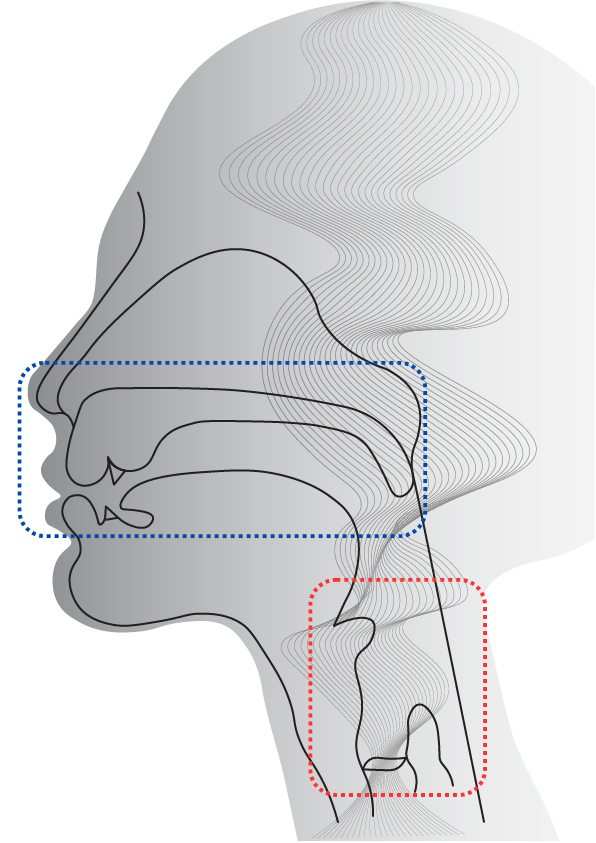
There are 10 vowel phonems in Czech:
/a/, /e/, /i/, /o/, /u/, /á/, /é/, /í/, /ó/, /ú/
and 14 corresponding letters (graphemes):
a, á, e, é, ě, i, í, y, ý, o, ó, u, ú, ů
Czech vowels are traditionally displayed in a vowel triangle, illustrating tongue position during articulation:
| Front | Central | Back | |||
|---|---|---|---|---|---|
| High | /í/ /i/ |
/ú/ /u/ |
|||
| Mid | /é/ /e/ |
/ó/ /o/ |
|||
| Low | /á/ /a/ |
Quantity - Délka
The quantity—or duration—of a vowel is indicated in writing by:
- Čárka (accute accent): ´
used with á, é, í, ó, ú.
- Kroužek (circle): ˚
used exclusively for long /ů/, which does not appear at the beginning of a word. There is no difference in pronunciation between /ú/ and /ů/.
Long vowels are pronounced approximately twice as long as their short counterparts.
When referring to the quantity of individual vowels, we traditionally use pairs such as:
-
"krátké a" - "dlouhé á"
-
"krátké e" - "dlouhé é" ... and so on. 1
Vowel quantity is phonological; it can change the meaning of a word.
Compare:
-
pořad (programme, show) vs. pořád (always, all the time)
-
peče ((he) bakes) vs. péče (treatment, care)
-
sešit (paper notebook) vs. sešít (to sew together, to stitch up)
-
lože 2 (bed) vs. lóže (loge, lodge)
-
byt (flat, apartment) vs. být (to be)
Some words of foreign origin accept both a short and a long vowel without a difference in meaning:
-
archiv - archív
-
benzin - benzín
-
balonek - balónek
Diphthongs - Dvojhlásky
Czech has two diphthongs:
- /au/, as in auto (car) or pauza (pause, break)
similar to English wow [ˈwau];
- /ou/, as in kouzlo (magic) or moucha (fly)
close to English oh [əʊ].
The sequence eu (typical in words of foreign origin), as in neuron, pseudonym, or leukémie, is generally not considered a diphthong because it is usually pronounced as two separate vowels with a slight break: /e ' u/.
Graphemes i and y
Although different in spelling (and altering the meaning), there is no difference in pronunciation between:
- i and y, both pronounced /i/:
bit (bit, in computing) vs. byt (flat, apartment) - both pronounced as /bit/
- í and ý, both pronounced as /í/:
bít (to beat) vs. být (to be) - both pronounced at /bít/
A different situation arises when i/í follows certain consonants. See Palatalization in the next chapter for more details.