Grammatical aspect - Slovesný vid
See how to use this tool (1) or go to Grammatical Aspect - Pairs for additional features, including an error-reporting form and information about the size of the database.
-
This tool allows you to look up relevant imperfective–perfective pairs and see their conjugation and other related words.
Terminology and symbols
The descriptor for imperfective verbs is IMPF, and the symbol is: ♦︎.
The descriptor for perfective verbs is PF, and the symbol is: ●.How to look up a word
Start typing a word, and the system will narrow down the search to words beginning with those letters.
Diacritics are not necessary, but you can use them if you wish. Both štěkat and stekat will give you the same result.
The search works for both imperfective and perfective forms at the same time. Typing číst or přečíst will return the same pair: číst - přečíst.Clicking a displayed word or pair will give you additional information about its conjugation, as well as links to other sources for a more detailed overview.
What word form to use for search
Ideally, use the infinitive, as it is the lemma shown first. However, if you do not know the infinitive but only a conjugated form, that will also work. Try using číst (to read) and čtu (I read). Both will display the pair číst - přečíst.Additional information about verbs
Each verb also includes details on its conjugation category, the 1st-person singular and 2nd-person singular forms, and links to external resources. The link ↗P goes to Prirucka , ↗S to Slovnik Seznam (for word translations), ↗K to Korpus, and ↗N to Nechybujte portal.
Basic information
Most Czech verbs occur in pairs.
| Imperfective aspect | Perfective aspect | |
|---|---|---|
| CZE | Pomáhal jsem mu. | Pomohl jsem mu. |
| ENG | I was helping him. | I helped him. |
| Infinitive | pomáhat to help |
pomoct to help |
The imperfective aspect (nedokonavý vid) looks at an event as the process. We can measure the duration of the activity; it has its time. In English, it is expressed using a continuous tense.
The perfective aspect (dokonavý vid) views an event as a complete action (either in the past or future). Consequently, the perfective verb semantically has no present tense.
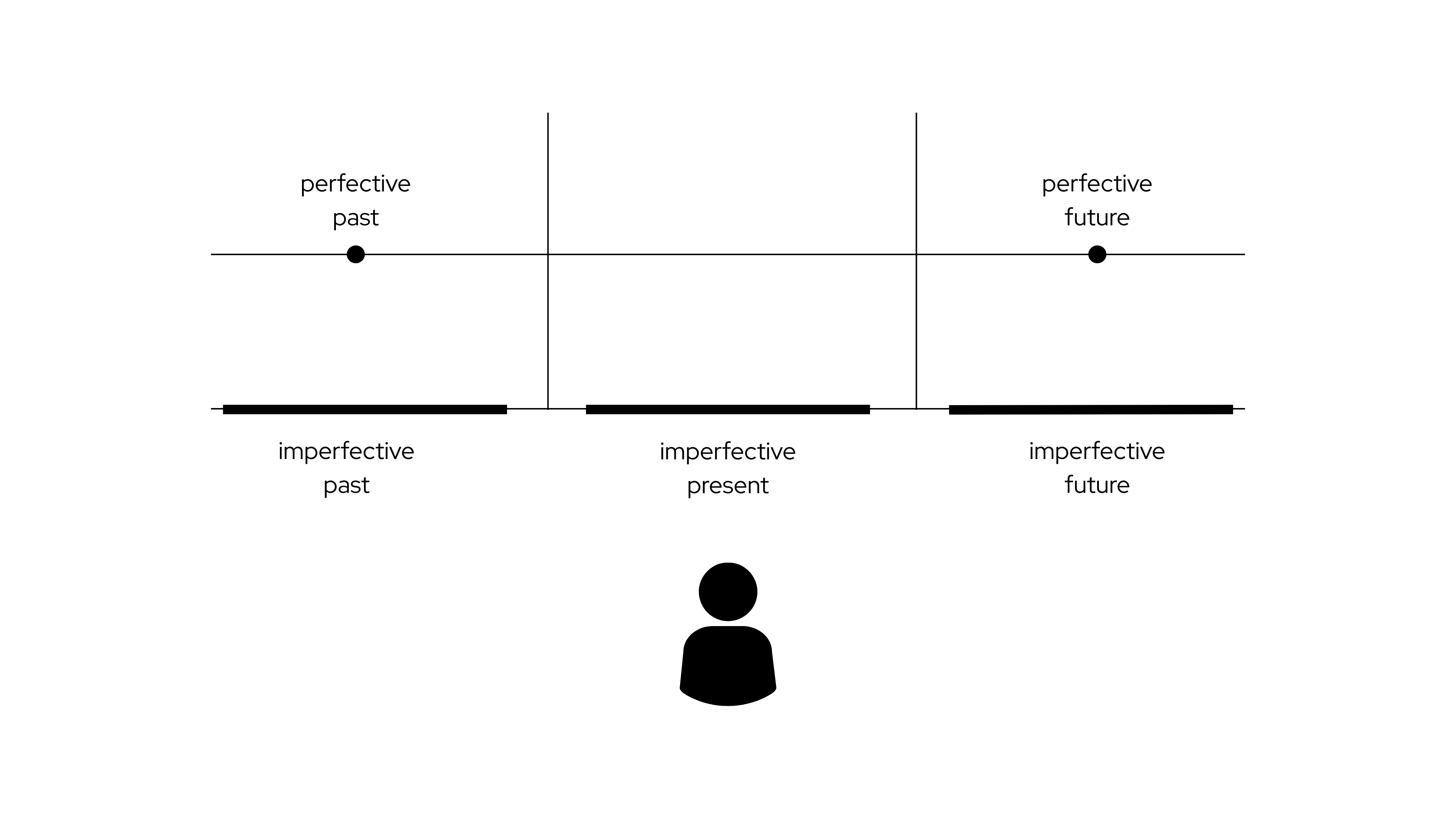
| Past tense | Present tense | Future tense | |
|---|---|---|---|
| Imperfective | Pomáhal jsem mu. | Pomáhám mu. | Budu mu pomáhat. |
| Perfective | Pomohl jsem mu. | - | Pomůžu mu. |
Note
Go to Tenses for a complete overview.
Some additional examples demonstrating the difference between imperfective and perfective aspects are provided in the table below:
| English | Imperfective | Perfective |
|---|---|---|
| to do | dělat | udělat |
| to write | psát | napsat |
| to sign | podepisovat | podepsat |
| to thank | děkovat | poděkovat |
| to pay | platit | zaplatit |
| to invite | zvát | pozvat |
Morphology
Prefixes
Usually, but not exclusively, the members of an aspectual pair (vidová dvojice) can be distinguished by the presence (or absence) of a perfective prefix.
Among the perfective prefixes are:
-
na-
psát - napsat (to write)
-
o-
holit - oholit (to shave)
-
po
zvát - pozvat (to invite)
-
pře-
číst - přečíst (to read)
-
u-
dělat - udělat (to do)
-
vy-
prát - vyprat (to wash)
-
z-
ničit - zničit (to destroy)
-
za-
platit - zaplatit (to pay)
Warning
Be cautious not to confuse perfective prefixes with semantically modifying prefixes, as they may appear similar. The perfective prefix does not alter the meaning of the verb.
For example, imperfective verb mluvit (to speak) has a prefixal variant přemluvit (to persuade). However, since the two words do not agree in the meaning, they do not form an aspectual pair.
The perfective přemluvit has its imperfective counterpart in the verb přemlouvat.
Suffixes
A certain number of verbs create aspectual pairs using suffixes.
Some examples are provided in the table below:
| English | Imperfective | Perfective |
|---|---|---|
| to apologise | omlouvat | omluvit |
| to buy | kupovat | koupit |
| go give | dávat | dát |
| to earn, make (money) | vydělávat | vydělat |
| to persuade | přemlouvat | přemluvit |
| to prove | dokazovat | dokázat |
| to sign | podepisovat | podepsat |
| to sentence | odsuzovat | odsoudit |
| to turn | otáčet | otočit |
Irregular pairs
Some verbs have irregular pairs:
| English | Imperfective | Perfective |
|---|---|---|
| to assemble | skládat | složit |
| to seek - to find | hledat | najít |
| to take | brát | vzít |
Note
Verb najít has another imperfective form → nacházet.
Imperfective-only verbs
There are verbs that only have an imperfective aspect (called also imperfective tantum). See some of them below:
| English | Czech |
|---|---|
| to be | být |
| to envy | závidět |
| to exist | existovat |
| to feel (+ adv) | cítit se |
| to hate | nenávidět |
| to have | mít |
| to look forward to | těšit se |
| to trust sb. | důvěřovat |
| to work | pracovat |
Note
Modal verbs like chtít (to want), muset (to must) are also imperfective-only.
See the page Modal verbs for a complete overview.
Sources
Due to its extreme complexity, there is yet no comprehensive tool that would easily cover the lexical overview of imperfective - perfective opposition. Nonetheless, with certain combination of sources (and with a help from a teacher or a native speaker), it is possible to get the proper information.
Update from June 01, 2026: We have launched a tool for looking up aspect pairs. Scroll to the top or go to the dedicated page to start searching. You also have alternatives (though they are not as user-friendly) — see them below.
Příručka
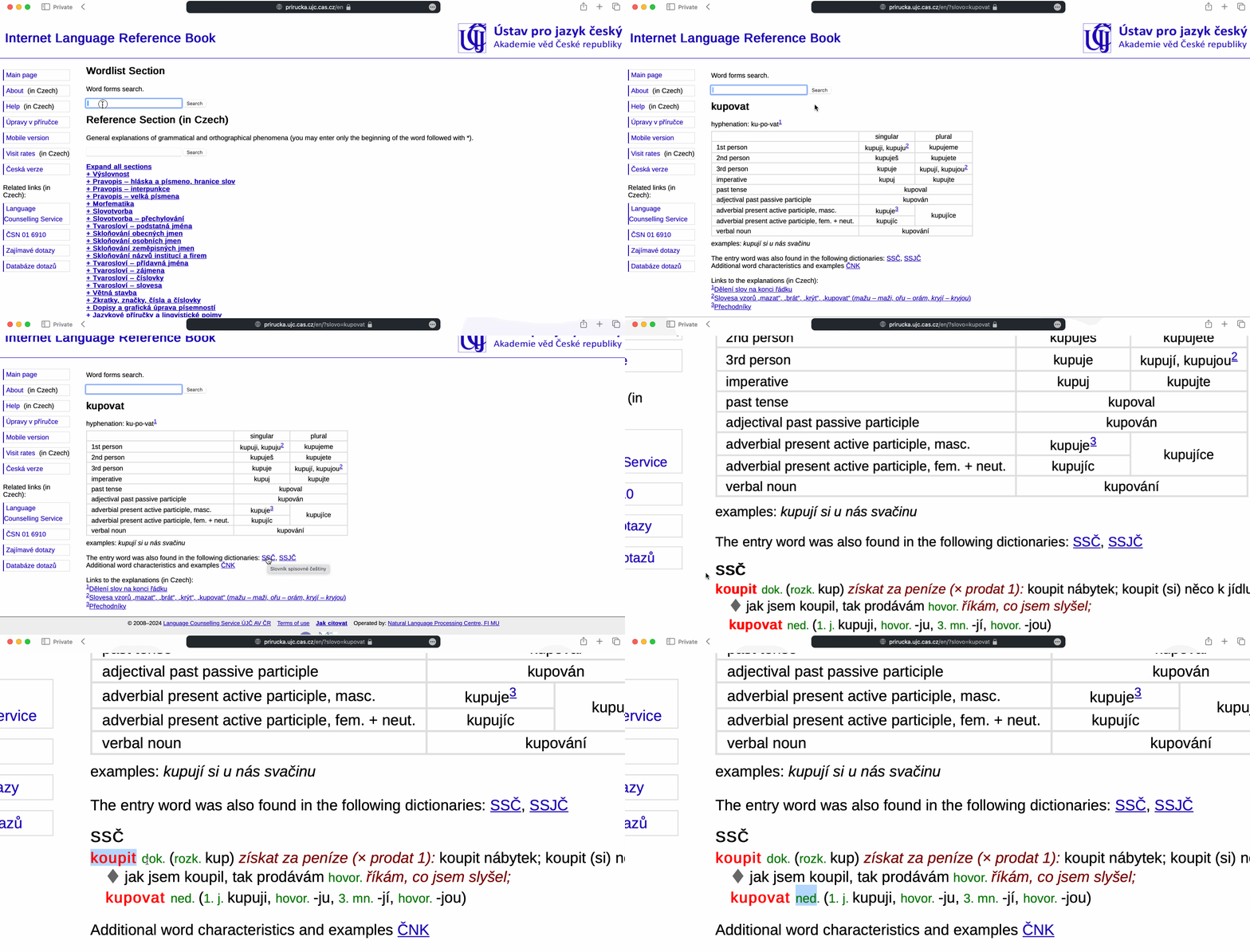
Příručka is so far the most advanced site about Czech language maintained by the Department of Czech Language of the Czech Acacemy of Sciences. See the gif below that demonstrates how to find the aspectual pair kupovat - koupit:
Nechybujte.cz
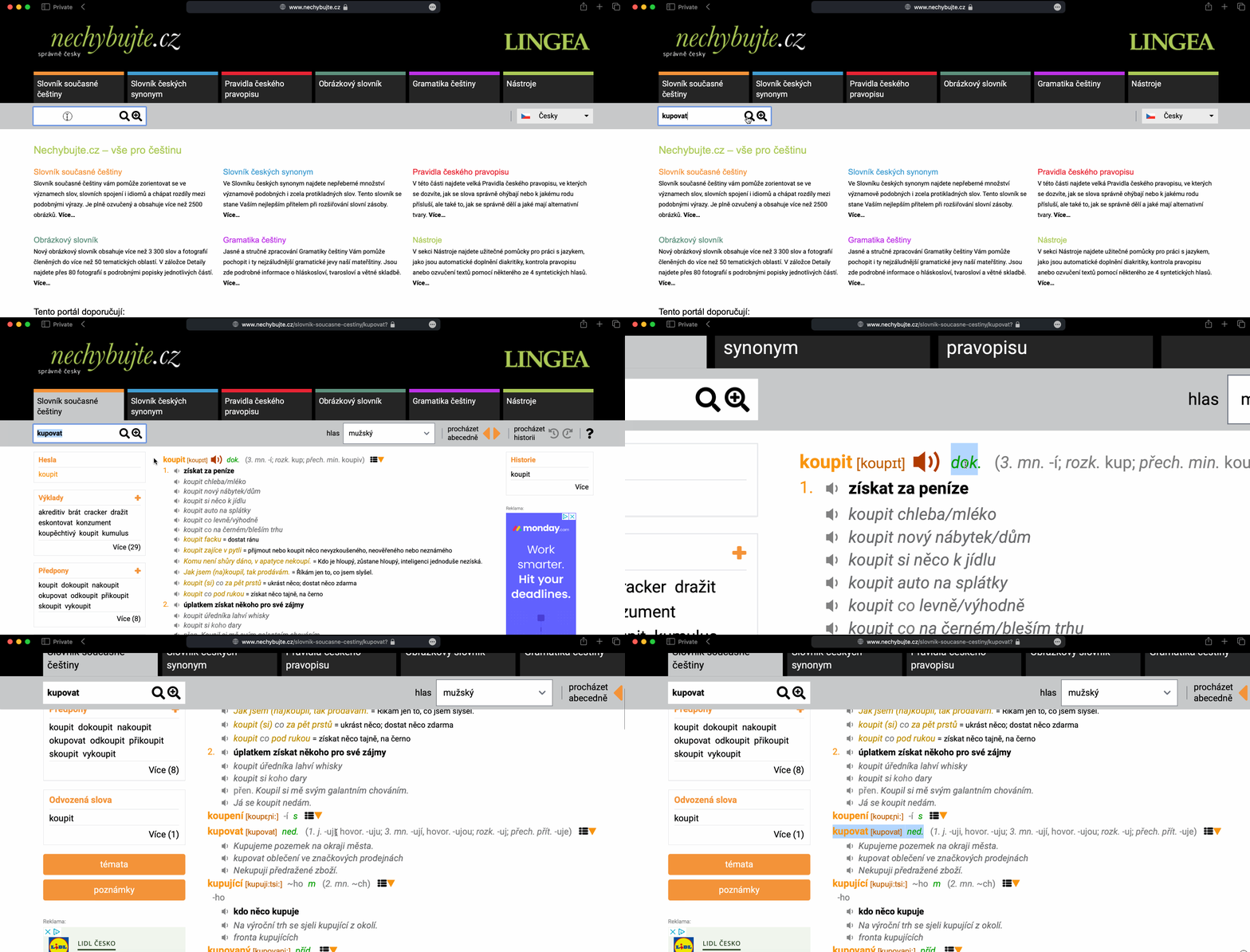
Nechybujte.cz is a commercial project of the publishing house Lingea. It contains various dictionaries and tools. See the gif below that demonstrates how to find the aspectual pair kupovat - koupit:
Wiktionary
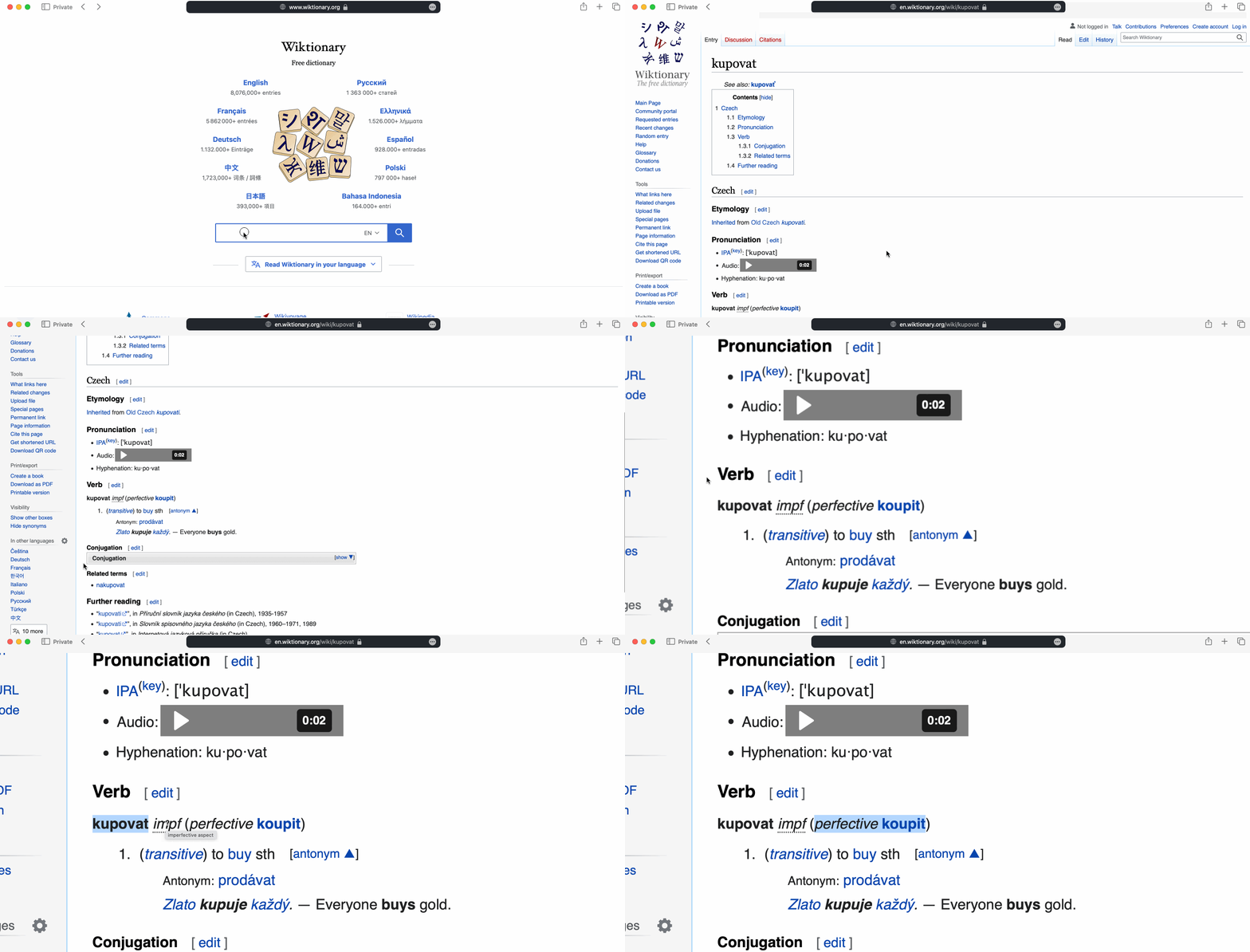
Wiktionary is a Wikipedia sister project. See the gif below that demonstrates how to find the aspectual pair kupovat - koupit:
One hundred pairs
We have collected a hundred pairs of verbs which might be useful to start with.
| Imperfective | 3rd SG | Perfective | 3rd SG | English |
|---|---|---|---|---|
| balit | balí | zabalit | zabalí | to pack, to wrap |
| brát | bere | vzít | vezme | to take |
| budit | budí | vzbudit | vzbudí | to wake (up) |
| čekat | čeká | počkat | počká | to wait |
| číst | čte | přečíst | přečte | to read |
| dávat | dává | dát | dá | to give |
| děkovat | děkuje | poděkovat | poděkuje | to thank |
| dělat | dělá | udělat | udělá | to do |
| dívat se | dívá se | podívat se | podívá se | to watch, to look |
| dokazovat | dokazuje | dokázat | dokáže | to prove, to be able to do sth. |
| doporučovat | doporučuje | doporučit | doporučí | to recommend |
| dostávat | dostává | dostat | dostane | to get, to receive |
| hledat | hledá | najít | najde | to search / to find |
| holit | holí | oholit | oholí | to shave |
| hubnout | hubne | zhubnout | zhubne | to lose weight |
| jíst | jí | sníst | sní | to eat |
| končit | končí | skončit | skončí | to finish, to end |
| kontrolovat | kontroluje | zkontrolovat | zkontroluje | to control |
| kousat | kouše | kousnout | kousne | to bite |
| krvácet | krvácí | vykrvácet | vykrvácí | to bleed |
| kupovat | kupuje | koupit | koupí | to buy |
| loučit se | loučí se | rozloučit se | rozloučí se | to say goodbye |
| měnit | mění | změnit | změní | to change |
| nahrazovat | nahrazuje | nahradit | nahradí | to replace |
| nasazovat | nasazuje | nasadit | nasadí | to put sth. on |
| navštěvovat | navštěvuje | navštivit | navštíví | to visit |
| nechávat | nechává | nechat | nechá | to leave |
| ničit | ničí | zničit | zničí | to destroy |
| obědvat | obědvá | naobědvat se | naobědvá se | to eat/have lunch |
| oblékat (se) | obléká (se) | obléct (se) | oblékne (se) | to wear, to put on |
| obnovovat | obnovuje | obnovit | obnoví | to renew |
| odstraňovat | odstraňuje | odstranit | odstraní | to remove |
| odsuzovat | odsuzuje | odsoudit | odsoudí | to sentence sb. to sth. |
| omlouvat (se) | omlouvá (se) | omluvit (se) | omluví se | to apologise |
| opalovat se | opaluje se | opálit se | opálí se | to sunbathe, get tanned |
| opravovat | opravuje | opravit | opraví | to fix, to correct |
| otáčet | otáčí | otočit | otočí | to turn |
| otvírat | otvírá | otevřít | otevře | to open |
| ovládat | ovládá | ovládnout | ovládne | to control |
| padat | padá | spadnout | spadne | to fall (down) |
| pálit | pálí | spálit | spálí | to burn |
| pamatovat si | pamatuje si | zapamatovat si | zapamatuje si | to remember |
| plánovat | plánuje | naplánovat | naplánuje | to plan |
| platit | platí | zaplatit | zaplatí | to pay |
| podceňovat | podceňuje | podcenit | podcení | to understimate |
| podepisovat | podepisuje | podepsat | podepíše | to sign |
| podvádět | podvádí | podvést | podvede | to cheat |
| pokoušet se | pokouší se | pokusit se | pokusí se | to try, to attempt |
| pomáhat | pomáhá | pomoct | pomůže | to help |
| posílat | posílá | poslat | pošle | to send |
| používat | používá | použít | použije | to use |
| prosit | prosí | poprosit | poprosí | to ask (for advise, help ...) |
| prát | pere | vyprat | vypere | to wash (clothes) |
| prodlužovat | prodlužuje | prodloužit | prodlouží | to extend, to prolong |
| programovat | programuje | naprogramovat | naprogramuje | to programme |
| prohrávat | prohrává | prohrát | prohraje | to lose (match, battle ...) |
| přát | přeje | popřát | popřeje | to wish |
| přemlouvat | přemlouvá | přemluvit | přemluví | to persuade, to talk into sth. |
| přestávat | přestává | přestat | přestane | to stop (doing sth.) |
| připravovat | připravuje | připravit | připraví | to prepare |
| psát | píše | napsat | napíše | to write |
| ptát se | ptá se | zeptat se | zeptá se | to ask (a question) |
| říkat | říká | říct | řekne | to say |
| rozhodovat se | rozhoduje se | rozhodnout se | rozhodne se | to decide |
| rozumět | rozumí | porozumět | porozumí | to understand |
| rozvádět se | rozvádí se | rozvést se | rozvede se | to divorce |
| setkávat se | setkává se | setkat se | setká se | to meet |
| skládat | skládá | složit | složí | to compose, to fold, to assemble, to put together |
| skákat | skáče | skočit | skočí | to jump |
| slavit | slaví | oslavit | oslaví | to celebrate |
| snídat | snídá | nasnídat se | nasnídá se | to eat/have breakfast |
| snižovat | snižuje | snížit | sníží | to reduce, to decrease |
| padat | padá | spadnout | spadne | to fall down |
| spojovat | spojuje | spojit | spojí | to connect |
| spoléhat se | spoléhá se | spolehnout se | spolehne se | to rely on |
| starat se | stará se | postarat se | postará se | to take care of |
| stávat se | stává se | stát se | stane se | to become, to happen |
| stěžovat si | stěžuje si | postěžovat si | postěžuje si | to complain |
| stříhat | stříhá | ostříhat | ostříhá | to cut |
| sundávat | sundává | sundat | sundá | to take off (clothes, sth. from sth.) |
| telefonovat | telefonuje | zatelefonovat | zatelefonuje | to call |
| tisknout | tiskne | vystisknout | vytiskne | to print |
| tvořit | tvoří | vytvořit | vytvoří | to create |
| učit se | učí se | naučit se | naučí se | to learn |
| ukládat | ukládá | uložit | uloží | to save, to store |
| uklízet | uklízí | uklidit | uklidí | to clean, to tidy up |
| umírat | umírá | umřít | umře | to die |
| umývat | umývá | umýt | umyje | to wash |
| uzdravovat se | uzdravuje se | uzdravit se | uzdraví se | to recover, to get well |
| vařit | vaří | uvařit | uvaří | to cook |
| večeřet | večeří | navečeřet se | navečeří se | to eat/have dinner |
| věřit | věří | uvěřit | uvěří | to believe |
| volat | volá | zavolat | zavolá | to call |
| vracet (se) | vrací (se) | vrátit (se) | vrátí se | to return |
| vyhrávat | vyhrává | vyhrát | vyhraje | to win |
| vychovávat | vychovává | vychovat | vychová | to bring up (a kid) |
| vydělávat | vydělává | vydělat | vydělá | to earn, to make money |
| vzpomínat (si) | vzpomínat (si) | vzpomenout (si) | vzpomene (si) | to recall, to remember |
| zabíjet | zabíjí | zabít | zabije | to kill |
| začínat | začíná | začít | začne | to begin |
| zálohovat | zálohuje | zazálohovat | zazálohuje | to backup (file ...) |
| zapomínat | zapomíná | zapomenout | zapomene | to forget |
| zavírat | zavírá | zavřít | zavře | to close |
| zhoršovat (se) | zhoršuje (se) | zhoršit (se) | zhorší (se) | to get worse |
| zlepšovat (se) | zlepšuje (se) | zlepšit (se) | zlepší se | to get better, to improve |
| ztrácet | ztrácí | ztratit | ztratí | to lose |
| zůstávat | zůstává | zůstat | zůstane | to stay, to remain |
| zvát | zve | pozvat | pozve | to invite |
| zvykat si | zvyká si | zvyknout si | zvykne si | to get used to, become accustomed |
| zvyšovat | zvyšuje | zvýšit | zvýší | to increase |
| žádat | žádá | požádat | požádá | to ask (for advice, help ...) |
Note
Feel free to download the e-book Slovník českých vidových dvojic pro cizince (B1-B2) for an extended selection of vocabulary.